
Driving traffic to your website is easier than ever. With SEO, paid ads, and social media, businesses can attract thousands of visitors daily. But here’s the real challenge: Why aren’t those visitors converting into customers? If your website gets clicks but fails to generate leads or sales, the issue is rarely your product—it’s how users behave on your site. This is where behavior analysis becomes essential.
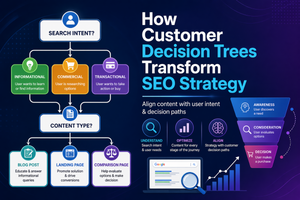
Related reading: How a Customer Decision Tree Can Transform Your SEO Strategy
What Is Behavior Analysis in Digital Marketing?
Behavior analysis in digital marketing is the process of understanding how users interact with your website, including:
- What they click
- How far they scroll
- Where they hesitate
- When they leave
Instead of guessing, you use real data to uncover why users don’t convert. The goal: identify friction points and remove them.
A conversion gap occurs when there’s a mismatch between:
- User expectations
- Website experience
- Final action (conversion)
Even small issues—like unclear messaging or slow loading speed—can cause users to leave. Important insight: Users don’t abandon your website randomly. They leave because something doesn’t feel right.
The Psychology Behind User Behavior
To improve conversions, you need to understand how users think.
Cognitive Load: Too Much Information = No Action
When users feel overwhelmed, they don’t decide—they leave. Common causes:
- Too many choices
- Complex navigation
- Long, unstructured text
Solution: Simplify your design and guide users step by step.
Decision Anxiety: Fear of Making the Wrong Choice
Users hesitate when:
- Prices are high
- The brand is unfamiliar
- The outcome is unclear
How to reduce it:
- Add testimonials and reviews
- Show real results
- Offer guarantees
- Lack of Immediate Value
Users ask themselves one question within seconds: “What’s in it for me?” If your website doesn’t answer this immediately, conversions drop. Strong example: “Increase your leads by 3x with data-driven marketing strategies”
The Real Reasons Why Users Don’t Convert
Let’s break down the most common (and often hidden) conversion barriers.
1. Poor First Impression
Users form an opinion in seconds.
Problems:
- Slow loading speed
- Outdated design
- Cluttered layout
Fix:
- Optimize speed
- Use a clean, modern design
- Clearly communicate your value above the fold
2. Weak or Unclear Value Proposition
If users don’t understand what makes you different, they won’t convert.
Improve by:
- Focusing on benefits, not features
- Being specific about results
- Highlighting your unique expertise
3. Lack of Trust Signals
Trust is critical for conversions. Missing elements:
- Reviews
- Testimonials
- Case studies
- Certifications
👉 Without trust, users hesitate—and hesitation kills conversions.
4. Complicated User Journey
If users have to think too much, they leave.
Red flags:
- Too many steps
- Confusing navigation
- Hidden CTAs
Solution:
- Simplify the journey
- Make actions obvious
- Reduce unnecessary steps
5. Weak Call-to-Actions (CTAs)
Your CTA is the turning point of conversion.
Common mistakes:
- Generic text like “Submit”
- Poor placement
- No urgency
Better CTAs:
- “Book Your Free Strategy Call”
- “Start Growing Today”
- “Get Your Free Audit”
6. Mismatch Between Traffic and Offer
If your messaging doesn’t match user expectations, they leave. Example:
- Ad promises a free audit
- Landing page shows general services
👉 Result: High bounce rate.
7. Poor Mobile Experience
Most users browse on mobile.
Problems:
- Hard-to-click buttons
- Slow loading
- Poor layout
Fix:
- Use responsive design
- Optimize mobile speed
- Test across devices
8. No Clear Next Step
Sometimes users don’t convert simply because they don’t know what to do next.👉 Always guide users with a clear action.
9. Friction in Micro-Interactions
Small details matter.
Examples:
- Long forms
- Slow button response
- Confusing interactions
👉 These small issues create big drop-offs.
10. Lack of Personalization
Generic websites don’t convert well.
Improve with:
- Personalized messaging
- Dynamic content
- Targeted offers
11. Weak Emotional Connection
People don’t just buy products—they buy outcomes and feelings. Fix:
- Use storytelling
- Address pain points
- Show transformation
12. Inconsistent Messaging
If your brand message changes across channels, trust drops. 👉 Consistency builds confidence.
How to Analyze User Behavior Effectively (Tools, Metrics & What They Actually Mean)
Understanding why users don’t convert requires more than just looking at traffic numbers. You need to analyze behavior across the entire user journey—from first click to final action. Below is a practical, step-by-step breakdown of tools, key metrics, and how to interpret them.
1. Google Analytics 4 (GA4): Understanding the Big Picture
Google Analytics 4 is your foundation for behavior analysis. It shows how users move through your website and where they drop off.
Key Reports to Use:
🔹 User Acquisition Report
Where your traffic comes from (Google, ads, social, etc.) Key metrics:
· Sessions
· Engagement rate
· Average engagement time
· Conversions
👉 What to look for:
· High traffic + low conversions = mismatch in expectations
· Certain channels converting better = focus budget there
🔹 Engagement → Pages & Screens
What it shows:
· Performance of individual pages
Key metrics:
· Views
· Engagement rate
· Average time on page
👉 Insights:
· High traffic + low engagement → weak content or poor UX
· Long time on page + low conversions → confusion or unclear CTA
🔹 Funnel Exploration (Critical for Conversions)
What it shows:
· Step-by-step user journey
Example funnel:
Landing page → Product page → Checkout → Purchase
Key metric:
· Drop-off rate at each step
👉 Insight:
· The step with the highest drop-off is your biggest problem
🔹 Path Exploration
What it shows:
· Actual user navigation paths
👉 Insight:
· Users taking unexpected paths = navigation issues
· Users looping = confusion
2. Heatmaps (Hotjar / Microsoft Clarity): Visual Behavior Analysis
Heatmaps show what users actually do on your website—not what you think they do.
🔥 Click Heatmaps
What they show:
· Where users click
👉 What to look for:
· Users clicking non-clickable elements → UX problem
· Important buttons ignored → poor CTA placement
🔥 Scroll Heatmaps
What they show:
· How far users scroll
👉 Insights:
· CTA below 50% scroll → many users never see it
· Sharp drop-off → content not engaging
🔥 Attention Heatmaps
What they show:
· Areas with the most interaction
👉 Insight:
· Are users focusing on what actually matters?
3. Session Recordings: Watching Real User Behavior
Session recordings let you watch real user sessions.
What to observe:
· Hesitation (mouse hovering)
· Rage clicks (multiple clicks in frustration)
· Dead clicks (clicking non-clickable elements)
· Fast exits
👉 These are gold insights.
What problems look like:
· User moves cursor randomly → confusion
· Repeated clicks → broken UX
· Quick scrolling + exit → irrelevant content
4. Conversion Tracking: Measuring What Actually Matters
Without proper conversion tracking, you’re flying blind.
Key conversions to track:
· Form submissions
· Purchases
· Button clicks
· Calls / bookings
Metrics to analyze:
🔹 Conversion Rate
= Conversions / Visitors
👉 Low conversion rate = friction in the journey
🔹 Cost per Conversion (for ads)
👉 High cost = poor targeting or weak landing page
🔹 Assisted Conversions
👉 Shows which channels support conversions (not just last click)
5. A/B Testing Tools: Validating Improvements
Behavior analysis shows problems. A/B testing proves solutions.
What to test:
· Headlines
· CTAs
· Page layouts
· Images
· Pricing presentation
Key metric:
· Conversion rate improvement
👉 Even small changes can deliver big results.
6. Form Analytics (Highly Underrated)
Forms are often the biggest conversion barrier.
What to track:
· Field drop-off rate
· Time to complete
· Error rate
Insights:
· Users abandoning at a specific field → too complex or intrusive
· Long completion time → friction
👉 Solution: Reduce fields and simplify.
7. On-Site Surveys: Ask Users Directly
Sometimes the best insights come from users themselves.
Example questions:
· “What stopped you from signing up today?”
· “What information is missing?”
· “What almost made you leave?”
👉 This reveals insights no tool can fully capture.
How to Combine All Data (This Is Where Most Fail)
Most businesses look at tools separately—but real insights come from combining them.
Example Analysis:
· GA4 shows high drop-off on a landing page
· Heatmap shows users don’t scroll
· Session recordings show quick exits
👉 Conclusion:
Your above-the-fold content is weak or unclear
Another Example:
· Funnel shows drop-off at checkout
· Session recordings show hesitation
· Form analytics show users abandon at payment
👉 Conclusion:
Checkout process is too complicated or lacks trust signals
Common Mistakes in Behavior Analysis
Avoid these:
· Looking only at traffic (instead of behavior)
· Ignoring qualitative data (recordings, heatmaps)
· Making changes without testing
· Focusing on vanity metrics (likes, clicks)
👉 Always focus on what impacts conversions.
How to Analyze User Behavior Effectively
To improve conversions, you need data—not assumptions.
What to analyze:
Bounce rate → Are users leaving immediately?
Scroll depth → Are they seeing your CTA?
Click behavior → Are they engaging?
Funnel drop-offs → Where do they exit?
Turning Data Into Results: A Proven Framework
Step 1: Identify Friction Points
Find where users hesitate or drop off.
Step 2: Create Hypotheses
Example: “Users don’t convert because the CTA is unclear.”
Step 3: Test Improvements
- Change headlines
- Optimize layout
- Improve CTAs
Step 4: Measure & Iterate
Track results and continuously optimize.
Why Most Businesses Struggle With Conversion Optimization
Many companies try to fix conversion issues themselves—but fail. Reasons:
- Misinterpreting data
- Focusing on the wrong metrics
- Lack of strategic direction
👉 Conversion optimization requires both data analysis and expertise.
When to Go Beyond Tools
Tools show what is happening. Experts explain why it’s happening—and how to fix it.
Strategic Layer (Where Real Growth Happens)
This is exactly where Digital Marketing Consulting by Dr. Lysetska adds value:
- Connecting data from multiple tools
- Identifying real conversion barriers
- Prioritizing high-impact fixes
- Building a structured optimization strategy
👉 Instead of random improvements, you get a clear roadmap for growth. Behavior analysis isn’t about collecting data—it’s about turning data into decisions.
When done correctly, it allows you to:
- Understand your users deeply
- Remove friction points
- Increase conversions systematically
How Digital Marketing Consulting by Dr. Lysetska Helps
If your website gets traffic but doesn’t convert, expert guidance can make the difference. Digital Marketing Consulting by Dr. Lysetska focuses on:
- In-depth behavior analysis
- Conversion funnel optimization
- SEO and paid traffic alignment
- UX and messaging improvements
- Data-driven growth strategies
The goal is simple: Turn your existing traffic into measurable revenue. When you fix conversion barriers, you can achieve:
- Higher conversion rates
- Lower cost per acquisition
- Increased user engagement
- Stronger brand trust
- Sustainable business growth
👉 Even a small improvement in conversion rate can significantly increase revenue. To grow your business, you need to:
- Understand user behavior
- Remove friction
- Guide users toward action
When your website aligns with how users think and behave, conversions follow naturally.
Ready to Turn Visitors Into Customers?
If your website isn’t converting as it should, the problem isn’t your traffic—it’s your strategy. With Digital Marketing Consulting by Dr. Lysetska, you can:
- Identify hidden conversion issues
- Optimize your funnel
- Turn insights into real business growth
👉 BOOK A CONSULTATION today and start converting more of your visitors into customers.